A giant stamp.
For cardboard.
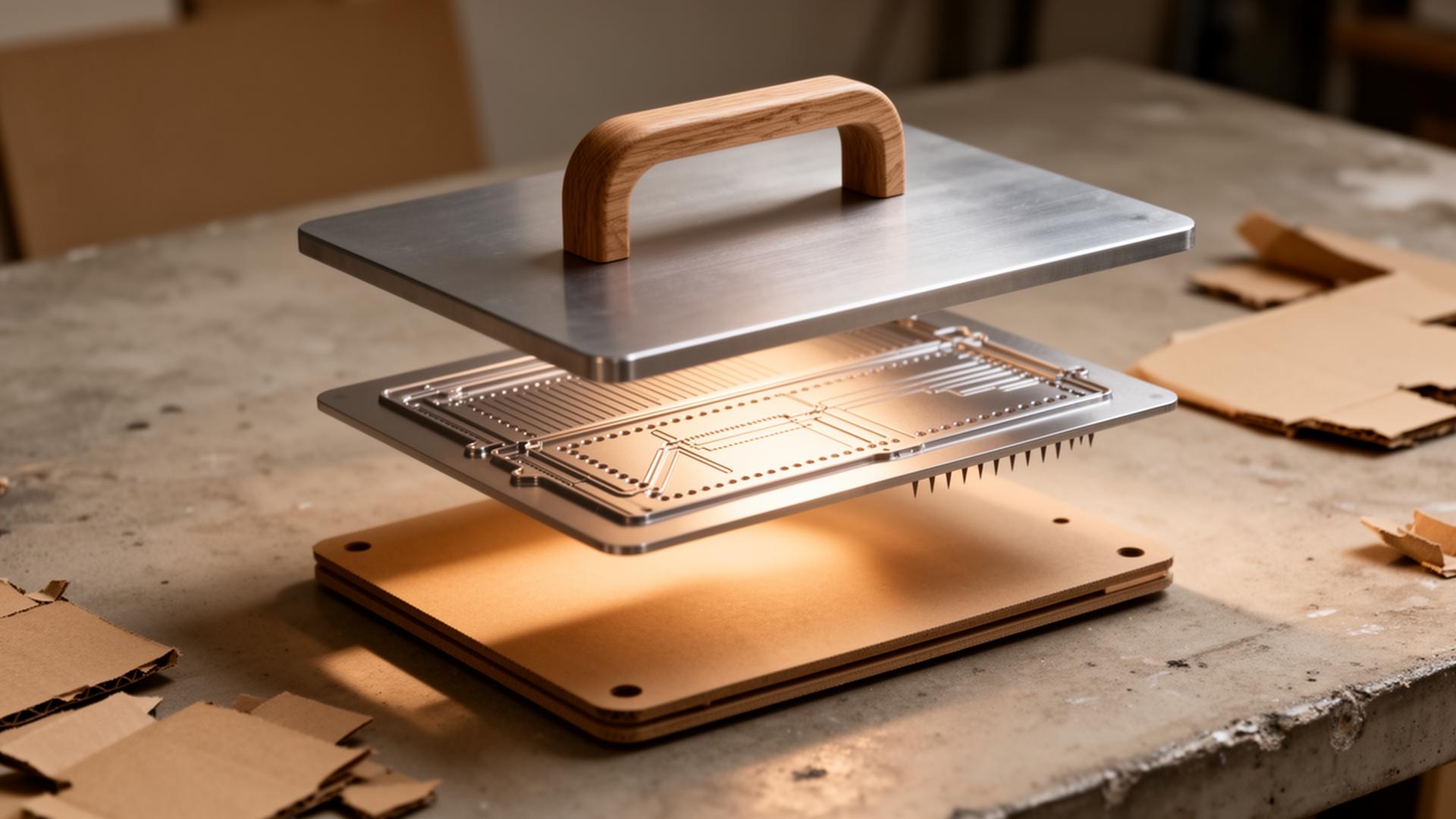
Think of it as a three-layer sandwich press for packaging. The top plate provides the force. The base holds your cardboard flat. And the middle layer — the brain — is a swappable steel template that does all the cutting, scoring and perforating in a single satisfying push.
- 01
Top plate — the force
Anodised aluminium with a turned-oak handle. Distributes 1.2 tonnes of mechanical pressure evenly across the entire bed.
- 02
Template — the brain
A precision steel die loaded into the middle layer. Cuts the outline, scores the folds, perforates the tabs. Swap it out in seconds for a totally different box.
- 03
Base — the bed
Magnetic kraft-faced platen holds your cardboard pin-flat and absorbs the cut so blades stay sharp for a decade of pressing.

Feed in any flat cardboard
Lift the top plate and lay your sheet across the magnetic kraft-faced base. New FSC stock, last week's Amazon mailer, a flattened crisp box — anything from 2 mm to 7 mm corrugated card is fair game. The bed snaps the sheet square in under a second.
Drop a template into the middle layer
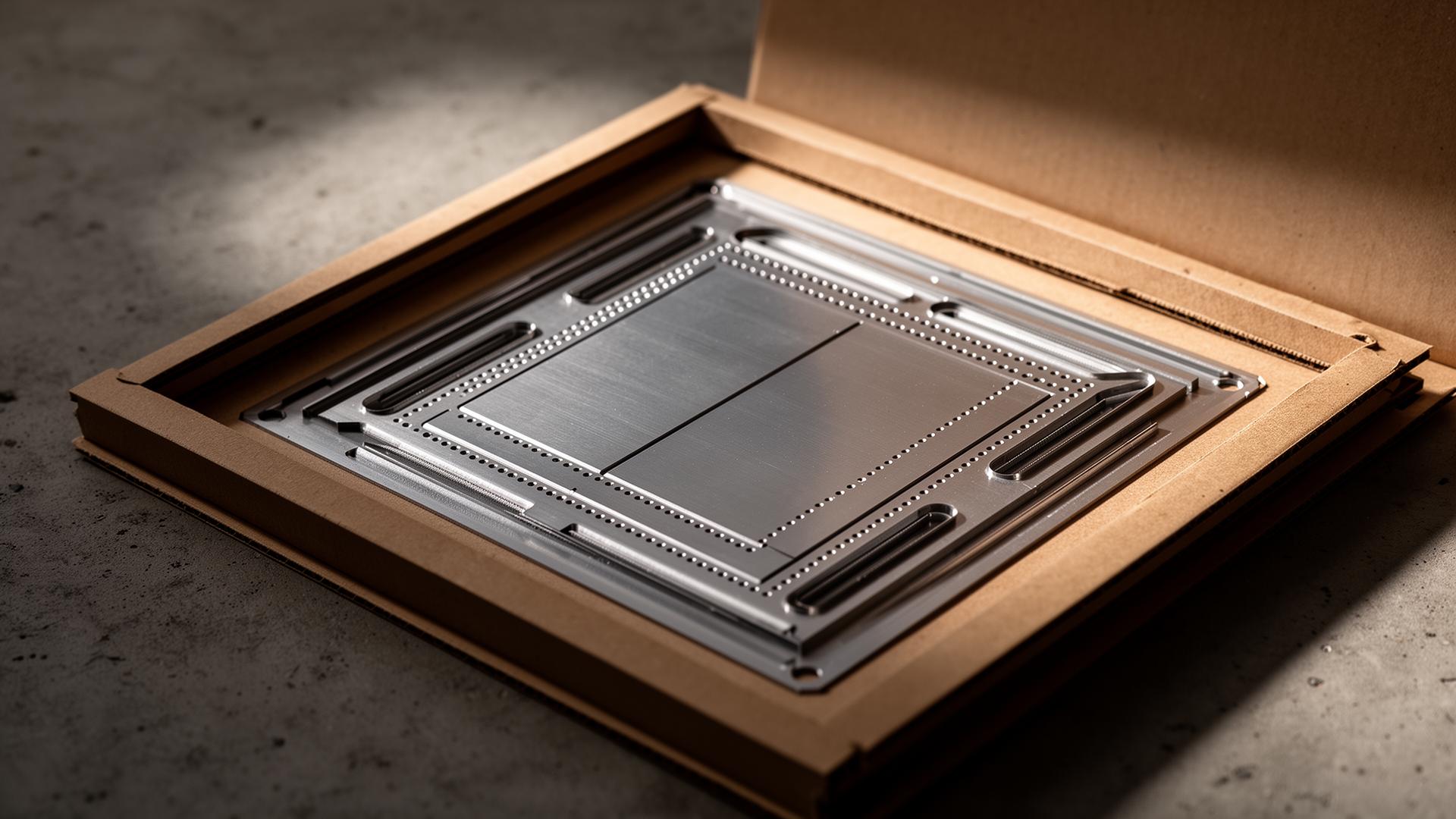
Each template is a precision-machined steel die. Magnetic registration pins guide it into the middle layer with zero alignment fuss. The die carries everything the box needs: cutting edges around the outline, dotted teeth for perforations, and rounded blades for clean fold scores.
One downward press, then fold
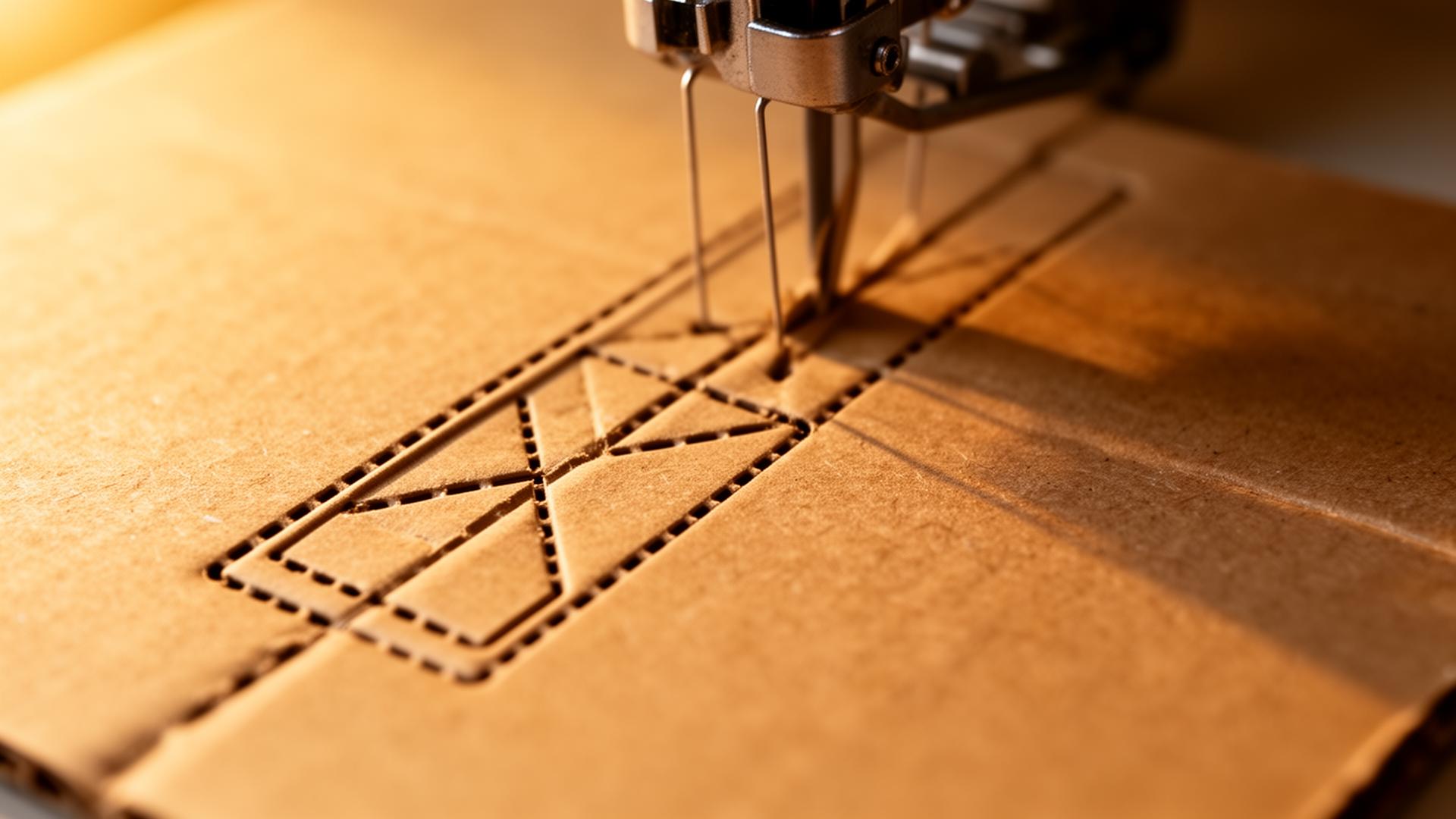
Lever the oak handle for two seconds. 1.2 tonnes of mechanical advantage drives the die cleanly through the card — outline cut, scores imprinted, perforations punched in a single stroke. Pop the waste away and fold along the lines. No glue, no tape, no waiting.
Built once. Pressed forever.
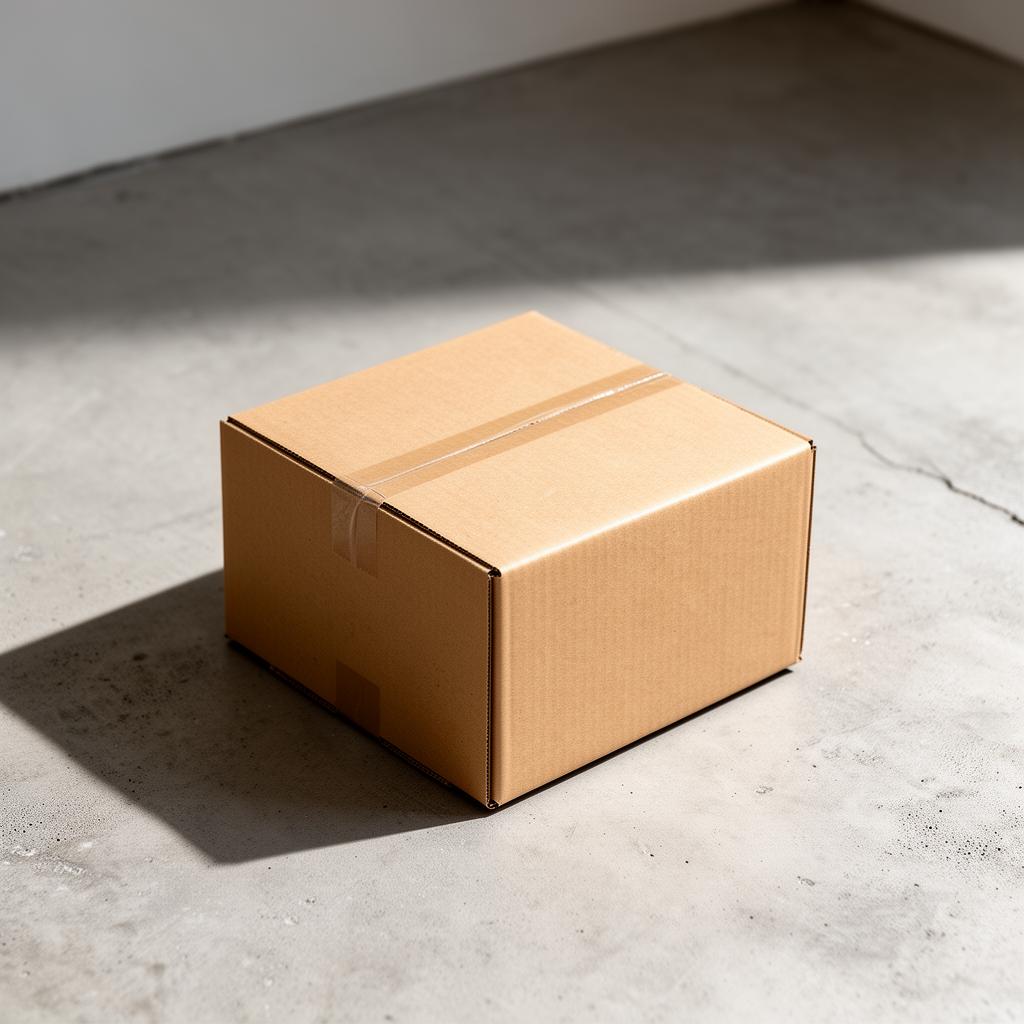
A finished box,
from rubbish, in 47 seconds.
That's the time from "old crisp box on the desk" to "branded mailer sealed and ready to ship". No glue. No tape. No tools. No mess.